
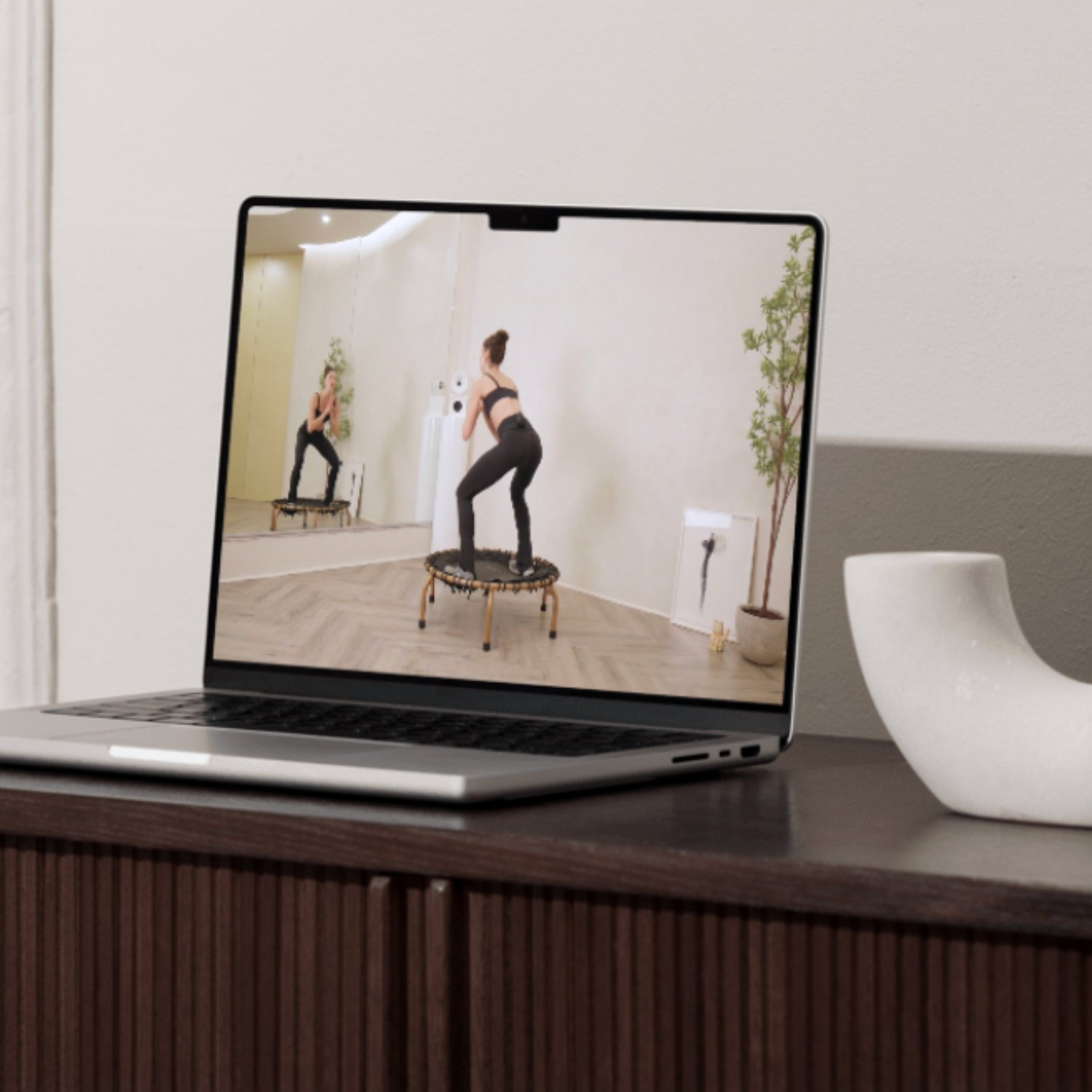
How to Use a Rebounder Properly: The Basics Most People Skip
Rebounding is powerful. It’s one of the most effective low-impact cardio methods available but a trampoline workout only stays low-impact if you’re using it correctly.
By Colette Dong
As the ness digital has grown, we’ve watched more and more people sign up, get their trampoline delivered, and immediately click the most advanced class on the platform.
Advanced Bounce.
High-intensity cardio.
The sweatiest trampoline workout available.
I understand it. If you’re going to do a rebounder workout, you want to feel it. You want the endorphins. You want the challenge. I couldn’t even get my own cousin to start at the beginning — and I sent explicit text instructions. But what I’ve seen — both in studio and through the screen — is that people are skipping the most important part.
The beginning.
So we rebuilt Mastering the Fundamentals.
Not because it wasn’t good.
But because it needed to go deeper. Slower where it matters. Clearer about alignment. More protective of your body.
Rebounding is powerful. It’s one of the most effective low-impact cardio methods available. It strengthens your stabilizers, supports lymphatic drainage, builds cardiovascular endurance without pounding your joints. That’s why we built the ness around it. But here’s the truth no one talks about: a trampoline workout only stays low-impact if you’re using it correctly.
How you land matters.
How you absorb force matters.
How you stack your ribs over your hips matters.
The rebounder is forgiving, yes — but it’s also responsive. It gives back what you put into it. If your weight shifts too far forward into your toes, your knees start taking over. If your core isn’t supporting you, your lower back compensates. If you rush into choreography without understanding the base bounce, your body works harder than it needs to.
And suddenly it’s just sweat — not strength.
We rebuilt Mastering the Fundamentals to change that.
We slowed down the base bounce. We refined how we teach landing mechanics. We clarified rhythm. We explained what you should actually be feeling — in your glutes, in your deep core, through your feet — so that even if this is your first rebounder workout at home, you understand what’s happening in your body.
Because when it clicks, everything changes.
Your bounce gets lighter.
Your cardio feels smoother.
Your strength work feels intentional instead of frantic.
The results come faster — not because you’re doing more, but because you’re doing it well. I’m adamant about you starting here.
If you’re new to rebounding, this is your entry point. It doesn’t mean you’re new to fitness. It means you’re learning a specific method.
If you’ve been subscribed but something feels slightly off — your hips grip, your lower back tightens, you can’t quite find the rhythm — this is your reset.
And if you’re advanced? This might matter most for you.
Every serious athlete revisits fundamentals. Dancers drill technique daily. Strength training is built on repeating foundational patterns for years. Mastery isn’t novelty. It’s refinement.
Rebounding is an incredible tool for long-term joint health, cardiovascular endurance, and full-body strength. But longevity only happens when the base is strong.
So start there.
Not because you have to.
Because it will change how every trampoline workout on this platform feels.